Business websites
Clear service pages, structured content and contact journeys that work well on phones, keyboards and search engines.
We design and build business websites, customer portals and browser-based tools around a clear user journey and the systems behind it.
Content, integrations, accessibility and launch requirements are agreed before development begins.
The flow is an illustration. The actual journey follows your users and business process.
Built by NordCodex · Lund Bilmek
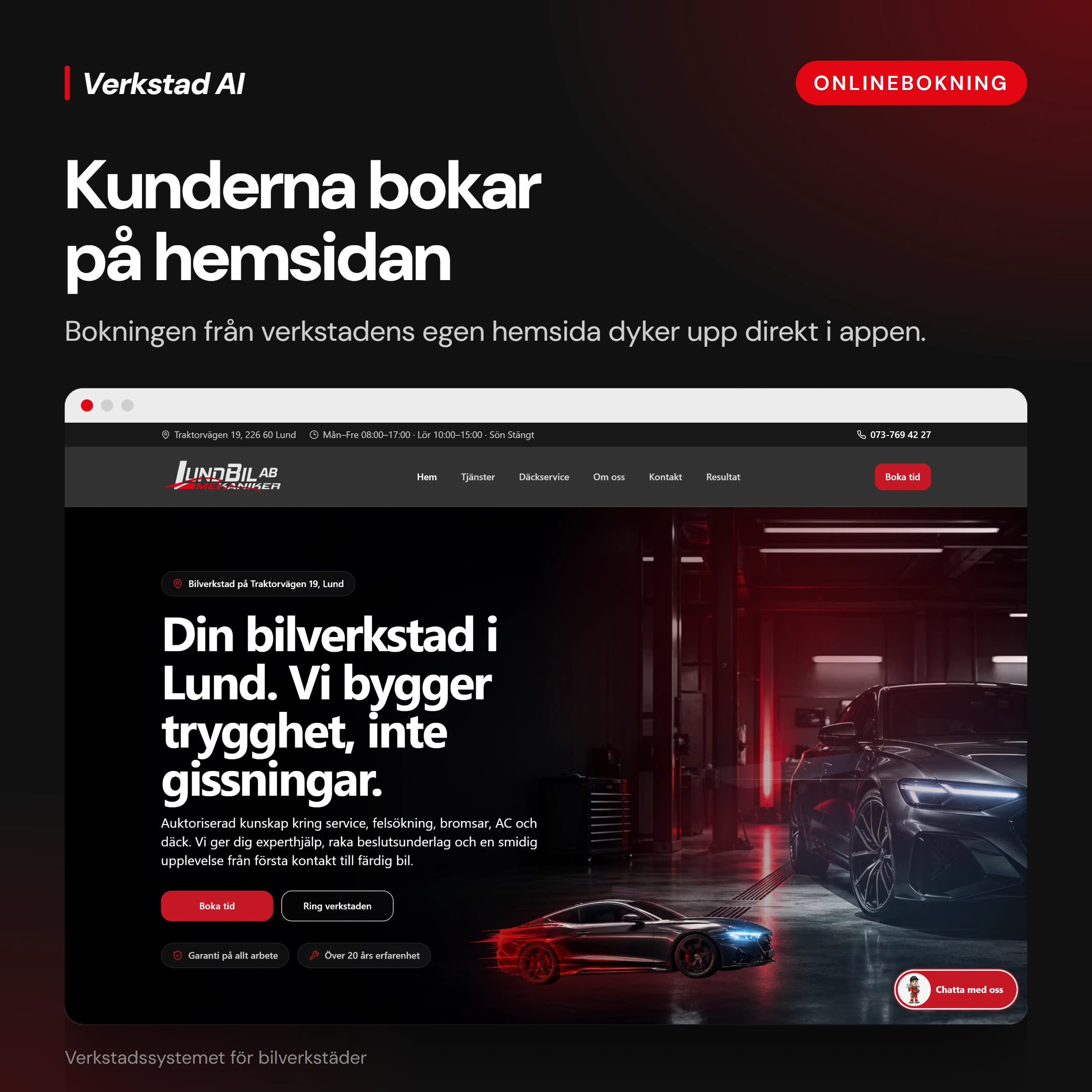
We built Lund Bilmek’s website, added a chatbot and connected the site to Verkstad AI, the desktop application we developed for the workshop. Website bookings enter the workshop’s system, where the team can use the same job details to create a work order, estimate and invoice with one click. The documents can then be sent to the customer or insurance company.
The service advisor sees the booking in the application’s calendar and reviews the customer and vehicle details to prepare the work order.
Visit Lund Bilmek’s website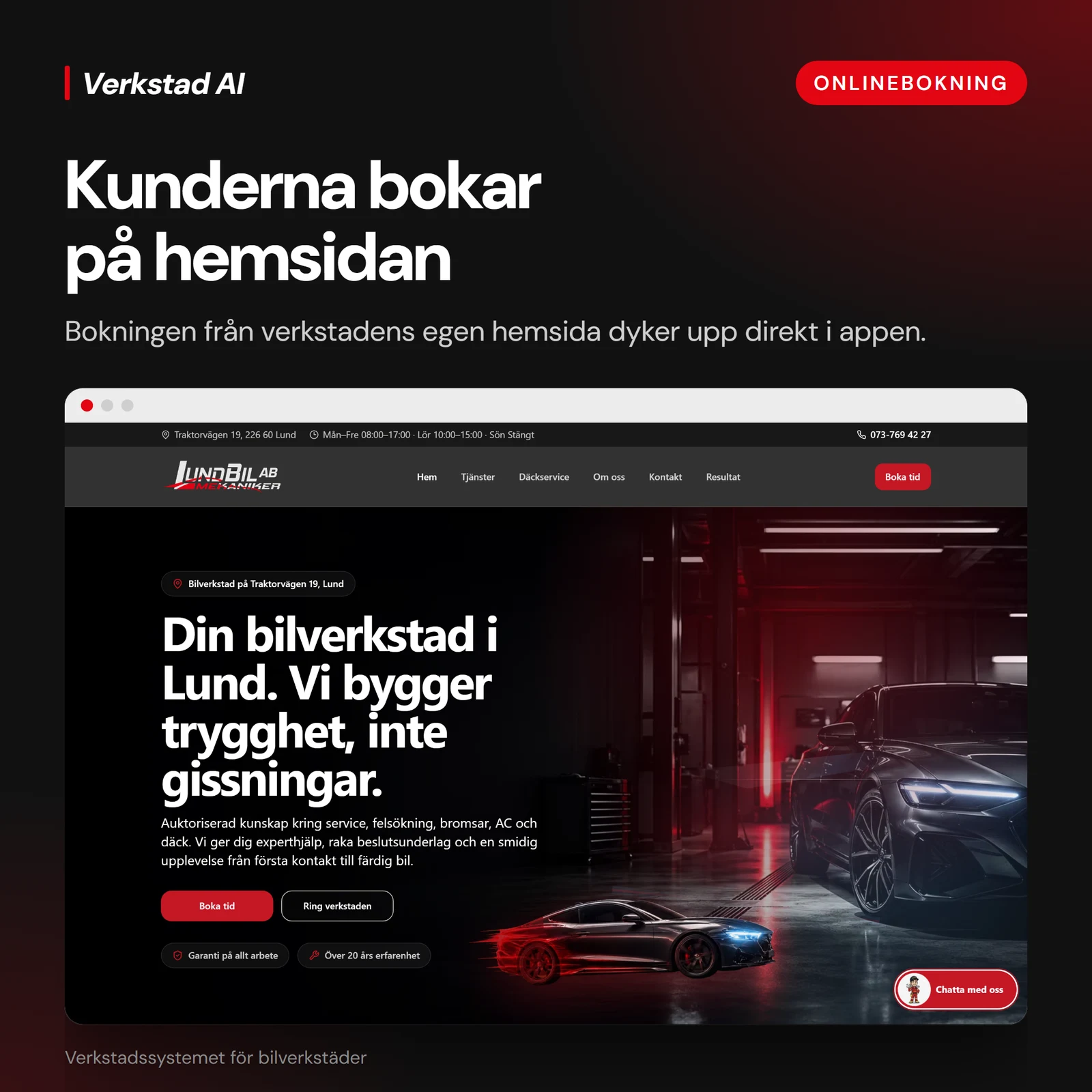 Enlarge image: Connect the website to the workshop
We start with what visitors or staff need to achieve, then choose the smallest maintainable solution that supports it.
Clear service pages, structured content and contact journeys that work well on phones, keyboards and search engines.
Secure areas where customers can submit information, follow work or use an agreed self-service flow.
Browser-based tools for bookings, records, operations and other business workflows.
If the main need is communication and enquiries, a focused website may be enough. If users must sign in, manage data or complete a workflow, we scope the application and its security separately.
Define the business problem, users, constraints and success criteria.
Choose the smallest architecture and scope that can solve the problem well.
Implement in reviewable increments with testing, security and clear ownership.
Measure what changed, fix friction and scale only what proves useful.
Agree useful page titles, crawlable content, canonical URLs, internal links and redirects. These are sound foundations, not a promise of rankings.
Clarify control of the domain, source, content and accounts. Separate development from hosting, paid services, maintenance and later additions.
Yes. We first inspect the current content, code, analytics and search setup, then recommend the smallest useful set of changes.
Responsive layout and keyboard access are part of the implementation and testing. Any special accessibility target is agreed in scope.
We assess the available APIs, permissions and supplier limits before including an integration in the proposal.
Describe the current journey, where people get stuck and which systems the site or application must connect to.
Use sample or anonymised information in your first message. Do not send passwords or private business records.